
Rain Gardens & Bog Gardens
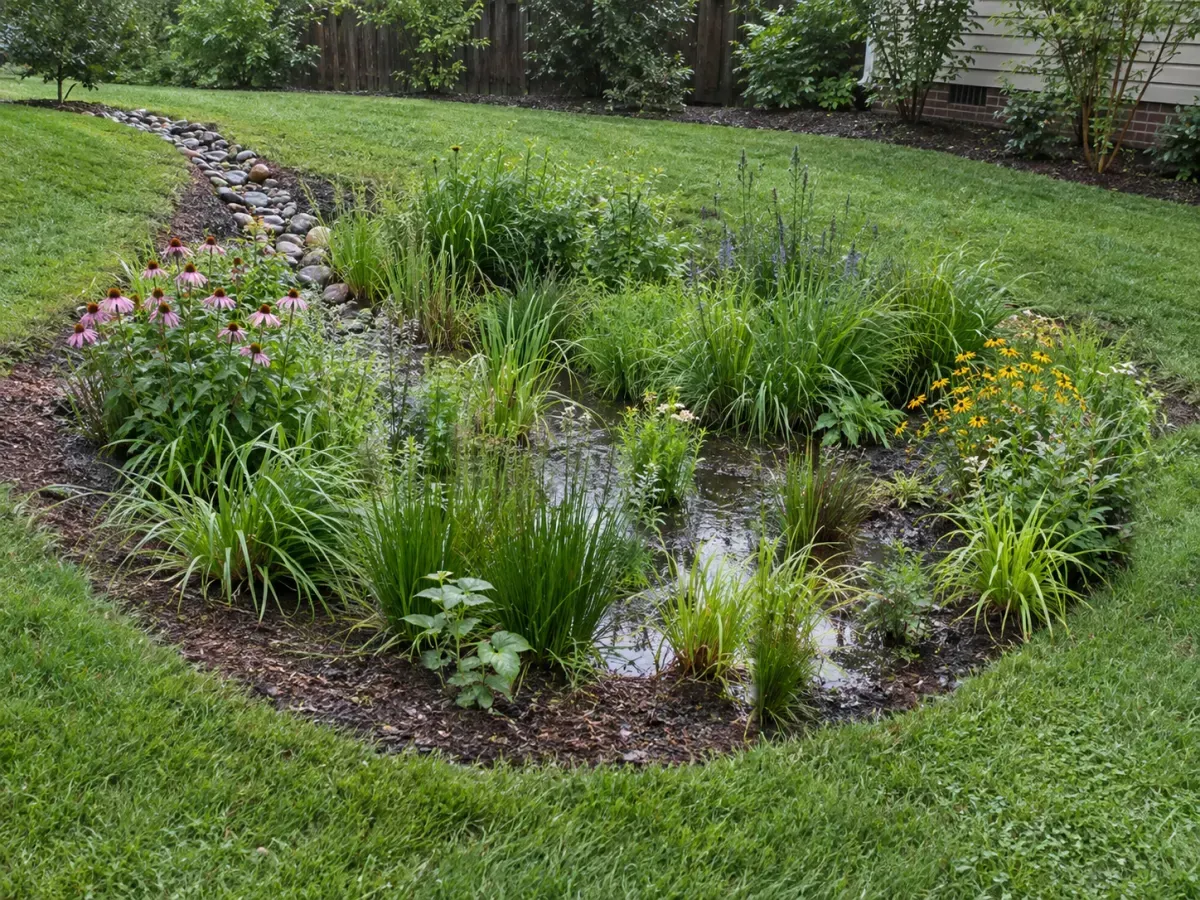
Extra water needs somewhere suitable to go. A rain garden can catch runoff in a shallow planted area, let it soak into the ground, and add seasonal color. A bog garden suits a different goal: a deliberately moist planting area for plants that like wet roots. We check the soil, slope, water source, and overflow route before recommending either for your Triangle yard.
Is This Right for Your Yard?
- Roof or patio runoff that could feed a planted area away from the house
- A damp part of the landscape where ordinary lawn struggles
- Wanting native planting that works with the way water moves through the yard
How We Approach It
- Assess the contributing runoff, soil infiltration, slope, utilities, and nearby structures
- Size and shape the planting area with an inlet and a safe overflow route
- Install suitable soil and plants, then explain establishment watering and inlet maintenance
The finished result: A planted area matched to the site's water conditions, with a plan for ordinary rain and larger storms.
Next Step
Send a few photos and the address. We will look at access and grade, talk through priorities, and tell you honestly if another step should come first.
Related Services
Drainage & Grading — Give stormwater a path before it damages the lawn, patio, or foundation.
Water Features & Koi Ponds — Small backyard ponds, recirculating waterfalls, and water features that fit your space.
Planting — Trees, shrubs, and foundation beds selected for your sun, soil, and routine.
Rain Gardens & Bog Gardens Near You
Questions about this service
Rain Gardens & Bog Gardens FAQ
What is the difference between a rain garden and a bog garden?
A rain garden holds stormwater temporarily and is designed to drain between storms. A bog garden is designed to stay moist for wet-soil plants. A water garden or pond typically has standing water. The right choice depends on the soil and the result you want.
Will a rain garden solve standing water in clay soil?
Not automatically. We check infiltration and the amount of runoff first. Slow-draining clay may need a different design, an underdrain with a suitable outlet, or conventional drainage. Simply digging a hole in a soggy yard can make the problem worse.
Where should a rain garden go?
Placement needs to account for foundations, utilities, septic systems, wells, property boundaries, and a safe overflow route. It should intercept appropriate runoff without sending water toward the house or onto a neighboring property. We assess those conditions during the site visit.
Do rain gardens hold water all the time?
No. A functioning rain garden drains between storms; it is not a permanent pond. We plan the soil and outlet for that cycle, and select plants that tolerate both wet periods and dry weather. Persistent standing water calls for a drainage assessment.